Composite vs PVC Decking: What’s the Difference?
If you’re planning a new deck, one of the biggest decisions you’ll face is choosing the right material. Two of the most popular low-maintenance options today are composite decking and PVC decking.
While they may look similar at first glance, they perform very differently in terms of durability, cost, appearance, and long-term value. Understanding these differences will help you choose the right option for your project.
What Is Composite Decking?
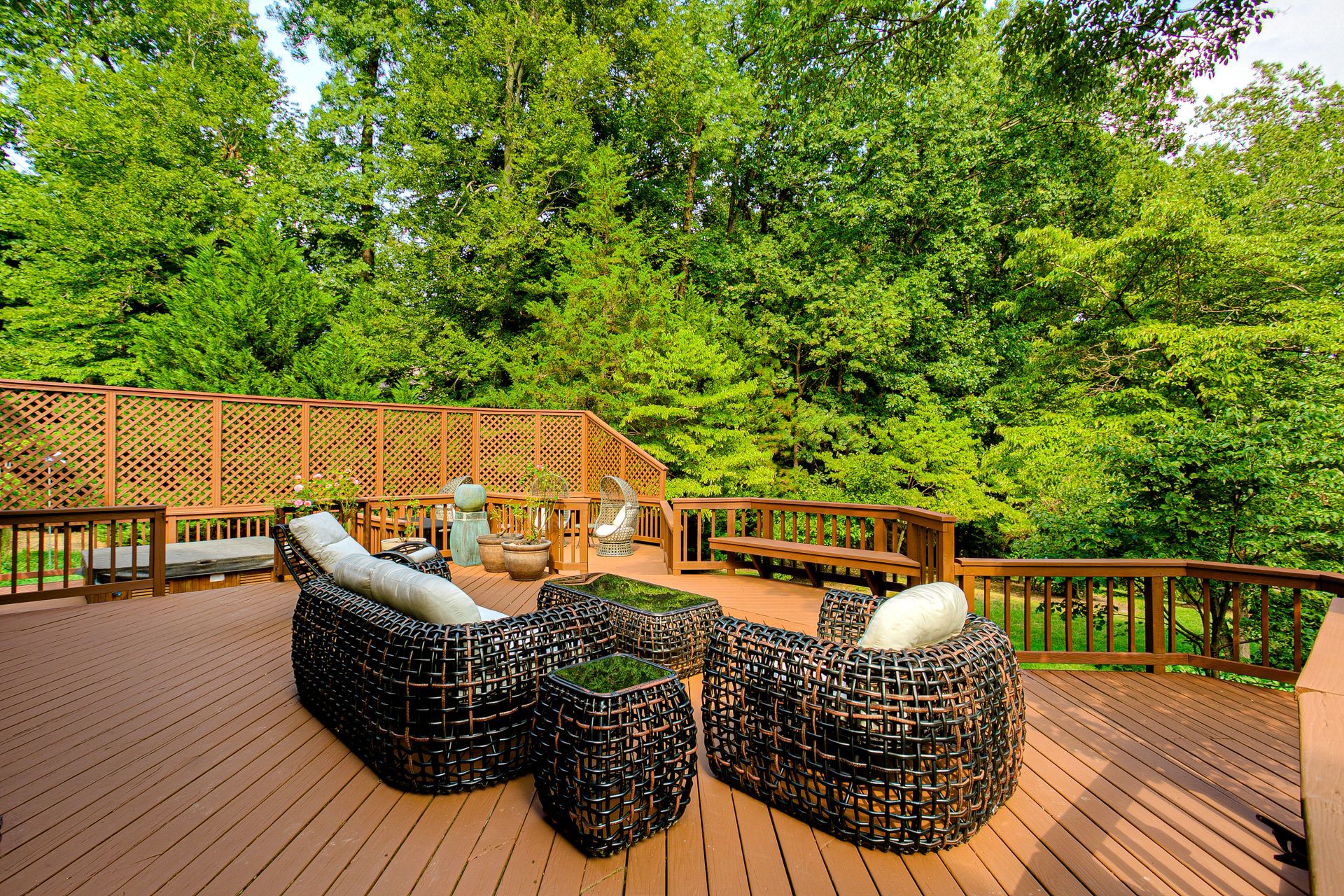
Composite decking is made from a blend of wood fibers and recycled plastic, typically combining both materials to create a durable, wood-like product.
Key benefits:
- Natural wood-like appearance
- More affordable than PVC
- Strong and durable
- Low maintenance compared to wood
Composite is a popular choice for homeowners who want the look of wood without the upkeep.
What Is PVC Decking?
PVC decking is made from 100% synthetic plastic (polyvinyl chloride) with no organic materials.
Key benefits:
- Completely waterproof
- Highly resistant to mold and mildew
- Extremely low maintenance
- Long lifespan
Because it contains no wood, PVC is especially effective in high-moisture environments.
The Key Differences
1. Material Composition
- Composite: wood fibers + plastic
- PVC: fully synthetic plastic
This is the biggest difference and affects everything from appearance to performance.
2. Appearance
- Composite decking looks more like real wood due to its natural fibers and grain texture
- PVC decking has a cleaner, more uniform appearance and can look more modern or synthetic
If aesthetics matter most, many homeowners lean toward composite.
3. Durability and Lifespan
- Composite typically lasts 25–30 years
- PVC can last 30–50+ years
PVC has the edge in longevity because it is completely resistant to rot and moisture.
4. Moisture Resistance
- Composite: highly water-resistant (especially capped boards)
- PVC: fully waterproof
PVC is the better choice for:
- Pool decks
- Docks
- High-humidity climates
5. Maintenance
Both options are low maintenance, but:
- Composite may require occasional cleaning and care
- PVC requires minimal upkeep and resists stains more easily
6. Cost
- Composite: more budget-friendly
- PVC: premium pricing
PVC costs more upfront, but its longer lifespan can offset that over time.
7. Heat and Comfort
- Composite tends to stay slightly cooler
- PVC can heat up more in direct sunlight
This is something to consider for decks with full sun exposure.
Which One Should You Choose?
Choose Composite Decking if:
- You want a natural wood look
- You are working within a budget
- Your deck is in a typical residential setting
Choose PVC Decking if:
- You want the lowest possible maintenance
- Your deck will be exposed to heavy moisture
- You want maximum durability and lifespan
Final Thoughts
Both composite and PVC decking are excellent alternatives to traditional wood. They offer durability, low maintenance, and long-term performance.
The right choice comes down to your priorities:
- Best value + natural look → Composite
- Best durability + moisture resistance → PVC
Need Help Choosing the Right Decking?
At Deck Supply of Nashville, we help homeowners and contractors find the right materials for their projects. Whether you’re comparing composite, PVC, or other options, our team can guide you toward the best solution for your space, budget, and goals.
Stop by our showroom or reach out today to get started on your deck project.